
The rain has finally arrived. After a long dry summer we are stepping into the wet winter season, and the long dry spell may has caused your guttering to develop problems that will lead to leaks and overflows that could cause penetring dampness in your home. Defective guttering is one of the most common causes of penetrating damp or structural decay.
Understanding the rainwater system and being able to identify guttering issues and defects is essential to prevent costly water damage.
Common Guttering Systems in the UK
- uPVC (Unplasticised Polyvinyl Chloride): The modern standard for UK homes. It is lightweight, cost-effective, free from rusting, and available in many different shapes and profiles. Floplast is a uPVC guttering manufacturer.
- Cast Iron: Found on Victorian, traditional, period and heritage properties. It is exceptionally durable but requires periodic repainting to stave off rust. Click here for more info on cast iron guttering.
- Aluminium & Steel: Increasingly popular for modern builds and commercial properties. These metals offer a durable and often seamless finish that handles heavy rainfall efficiently. There are many manufacturers and installers in the UK such as ARP
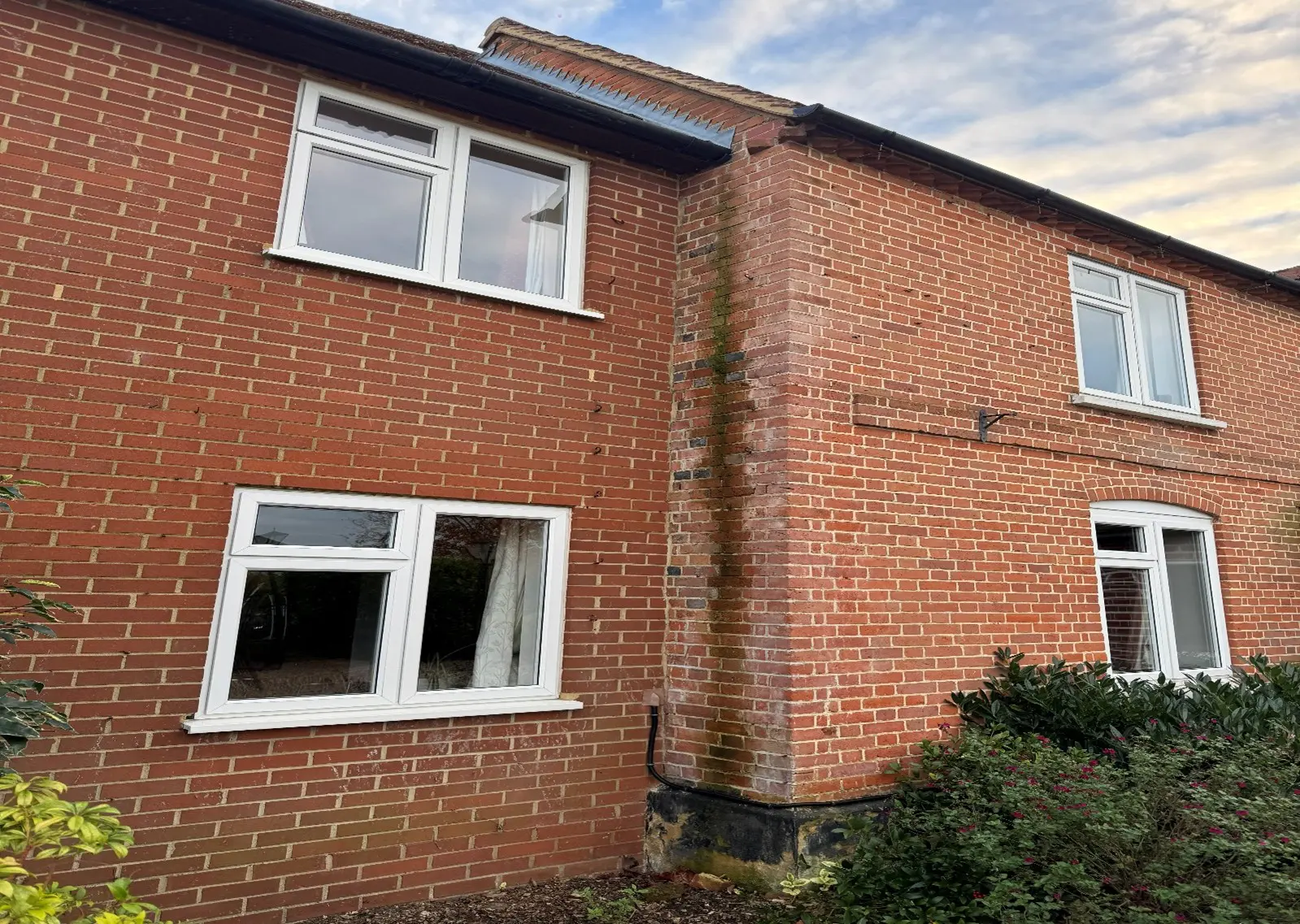
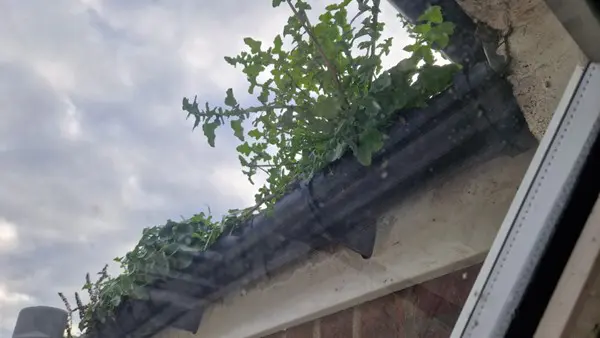
Common guttering defects that can lead to penetrating dampness and their causes
- Blockages and Overflows: This is by far the most frequent issue across all material types. Leaves, roof moss, and even bird nests accumulate in the channel. When the downpipe blocks, rainwater accumulates and spills over the edges, running directly down the exterior masonry.
- Leaking Joints: Gutters naturally expand and contract with temperature changes. This is likely to be more pronounced given the very hot and dry summer we have just experienced. In uPVC systems, this thermal movement gradually degrades the gaskets connecting the sections. In cast iron systems, the joint sealant and securing bolts disappear over time, allowing water to escape directly onto the walls below.
- Sagging and Poor Alignment/installation: A gutter pulling away from the fascia board disrupts the flow of water. This is typically caused by insufficient bracket support—such as brackets spaced too far apart—or the sheer weight of trapped water, wet debris, or winter snow dragging the system down.
- Incorrect Fall: Gutters must have a slight, continuous slope towards the downpipe. Poor installation or property settlement can level out this slope, causing water to sit stagnant in the channel rather than draining.
- Blocked or defective soakaway – resuls in water backing up in the down pipe and/or discharging teh rainwater at the base of the house wall
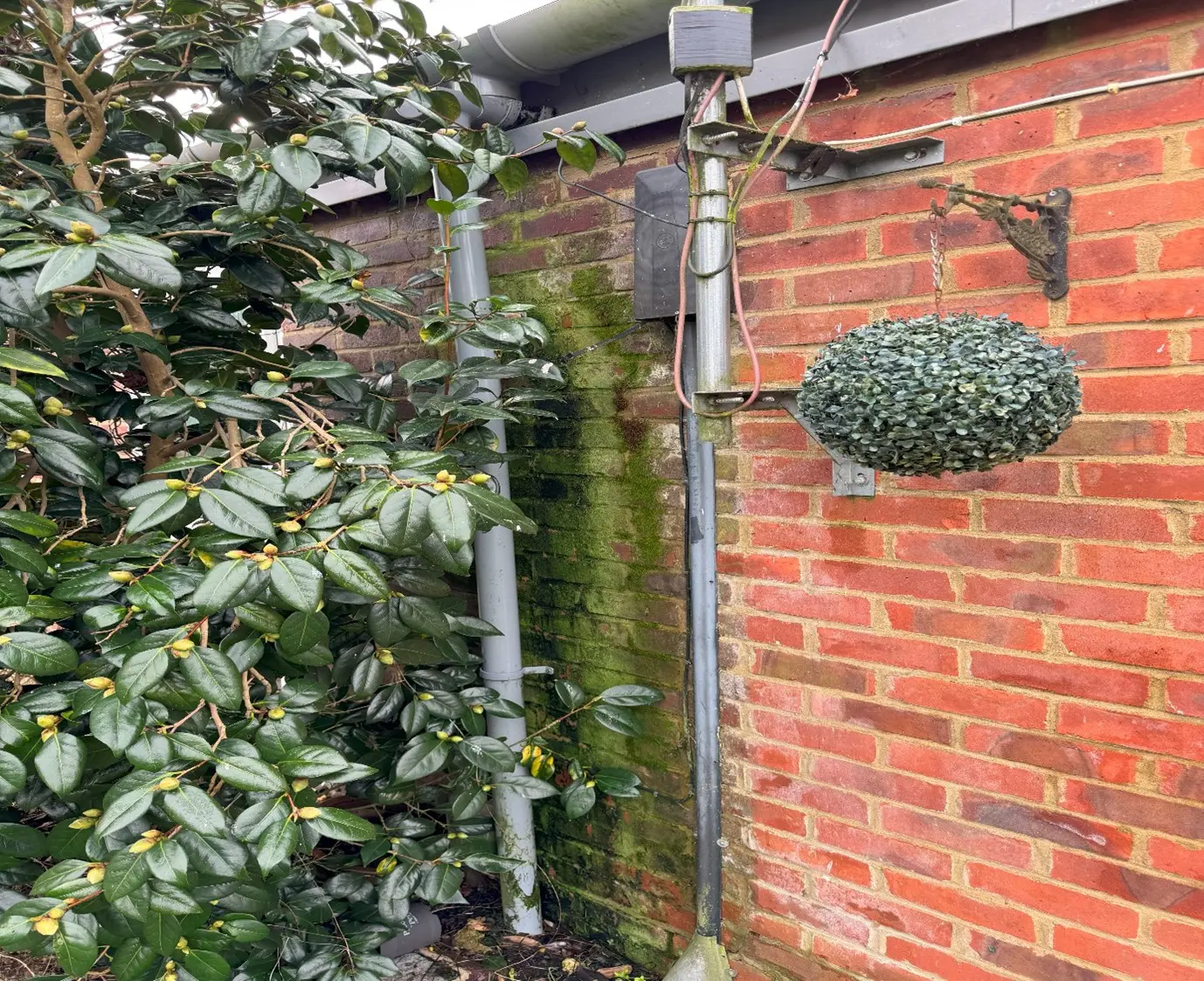
How to Prevent Guttering Failures causing dampness in your home
- Biannual Clear-Outs: Physically clear debris from the channels and downpipes at least twice a year—ideally in late autumn after the leaves have fallen, and again in spring.
- Install Gutter Guards: Consider fitting a brush or mesh leaf guard inside the gutter. These devices allow rainwater to filter through while keeping bulky moss and leaves out of the main flow.
- Reinforce Bracket Spacing: Ensure your guttering is supported by brackets spaced no more than 1 metre apart (this may be closer for heavier cast iron or high-capacity deep-flow systems – check manufacturers recommendations).
- Maintain Joint Seals: Proactively check uPVC joints for drips during heavy rain. The rubber gaskets are cheap and easy to replace before a minor drip becomes a major damp issue. For cast iron, regularly brush away surface rust and apply a rust-inhibiting metal paint to preserve the joints.
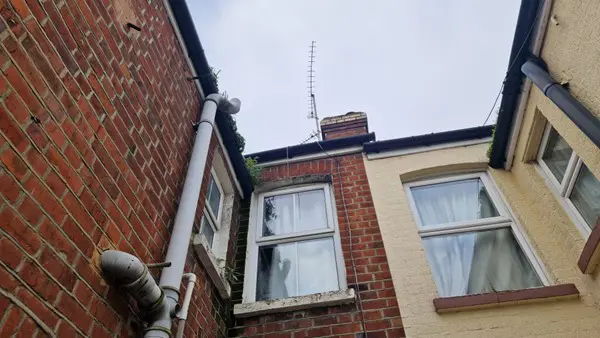
What to look for to see if you have a guttering problem that could lead to dampness in your home
- Look around the outside of your property to see if there is any sign of rainwater running down the brickwork or splashing onto the wall at ground level.
- Go outside when it is next rain hard and you will see if there are any areas of guttering that are overflowing or leaking.
- Check the drain or soakaway that the down pipe is discharging into to make sure it is running clear and not backing up
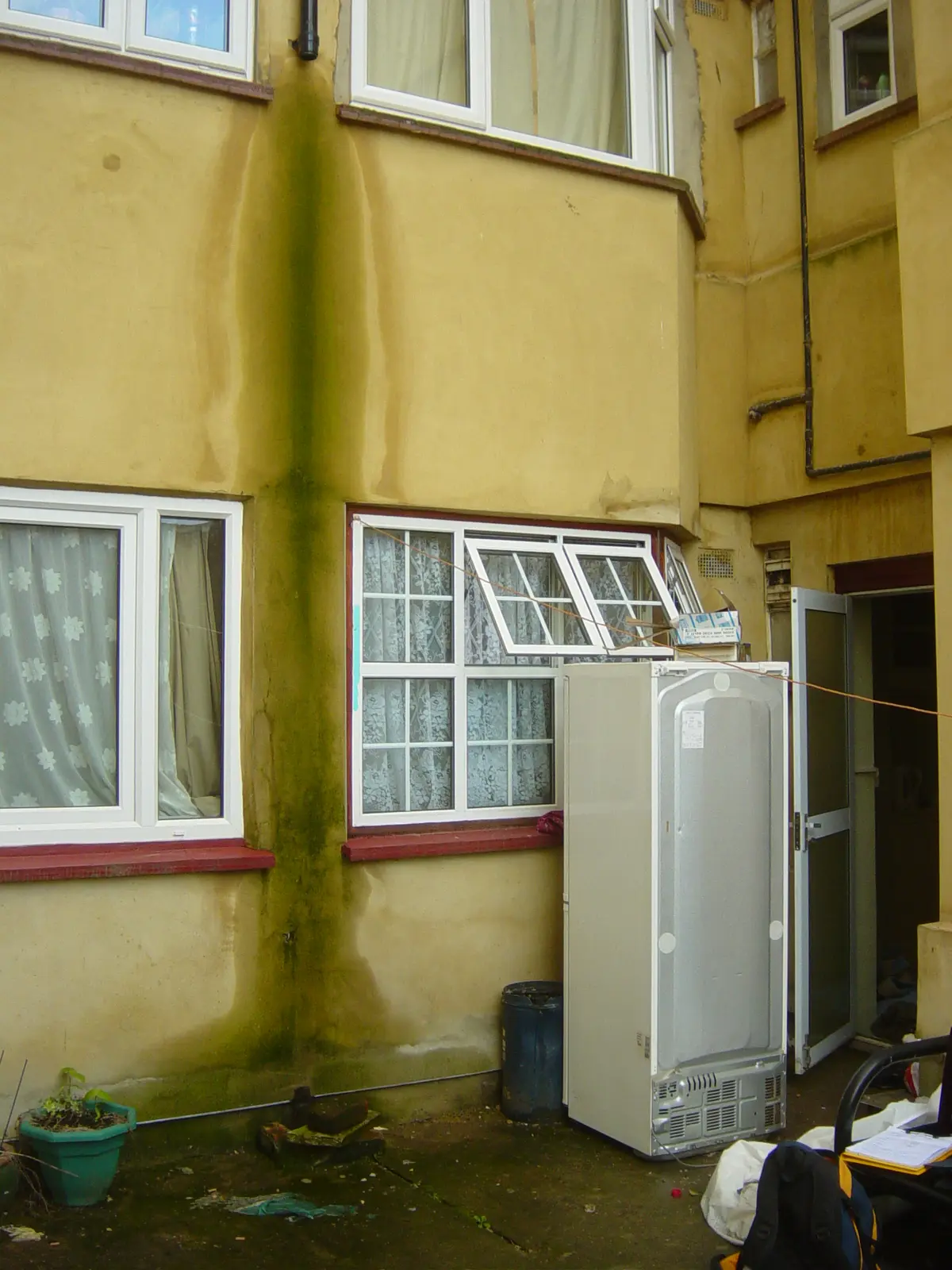
If you notice any problems them either repair or find a builder or roofer to quote for the repair works. If the soakaway is blocked, then you may need a drain specialist to assist.
Keeping the rainwater goods and soakaways in working order will help prevent penetrating dampness in your home.
For more information or to arrange a damp survey please click here