
WHY IS HOME VENTILATION IMPORTANT WHEN HAVING CAVITY WALL INSULATION INSTALLED – it prevents dampness and mould problems!
Cavity wall insulation is a great way to improve the energy efficiency of your home and save money on your heating bills. It is one of the key upgrades you can apply to your home, if you home is suitable for such insulation. However, one crucial factor that can often get overlooked in the process is home ventilation. Proper home ventilation is paramount for ensuring the effectiveness and longevity of cavity wall insulation and preventing dampness and mould.
Why is ventilation important to prevent dampness and mould?
Ventilation is important for a number of reasons:
First, it helps to prevent condensation from building up in your home. Condensation can cause a number of problems, including mould growth, which can be harmful to your health.
Second, without proper ventilation, the insulation material itself can become a trap for moisture. This moisture can come from various sources such as rain penetration, condensation, or leaks. By keeping the cavity dry, ventilation helps in maintaining the optimal performance of the insulation material.
Third, ventilation helps to remove pollutants from the air in your home. These pollutants can come from a variety of sources, including cooking, cleaning, and smoking.
Won’t Home Ventilation Increase My Bills?
No. Good ventilation works hand-in-hand with insulation to improve energy efficiency. While insulation helps in retaining heat within the house during winter and keeping it cool in summer, ventilation ensures that any excess moisture is expelled from the cavity.
This balance is essential because moisture-laden air has a higher thermal conductivity than dry air, which can reduce the insulation’s effectiveness. Thus, by keeping the cavity dry, ventilation helps in maintaining the optimal performance of the insulation material.
What are the consequences of inadequate ventilation?
If you don’t have adequate ventilation, you may experience a number of problems, including:
- Moisture build up and mould growth
- Poor indoor air quality
- Increased risk of potential respiratory and helath problems
- Increased risk of structural integrity compromises
What home ventilation should I install?
The most common approach to home ventilation is the use of good quality extract fans in the kitchen, bathroom, utility room and any other moisture producing areas, together with trickle vents on windows.
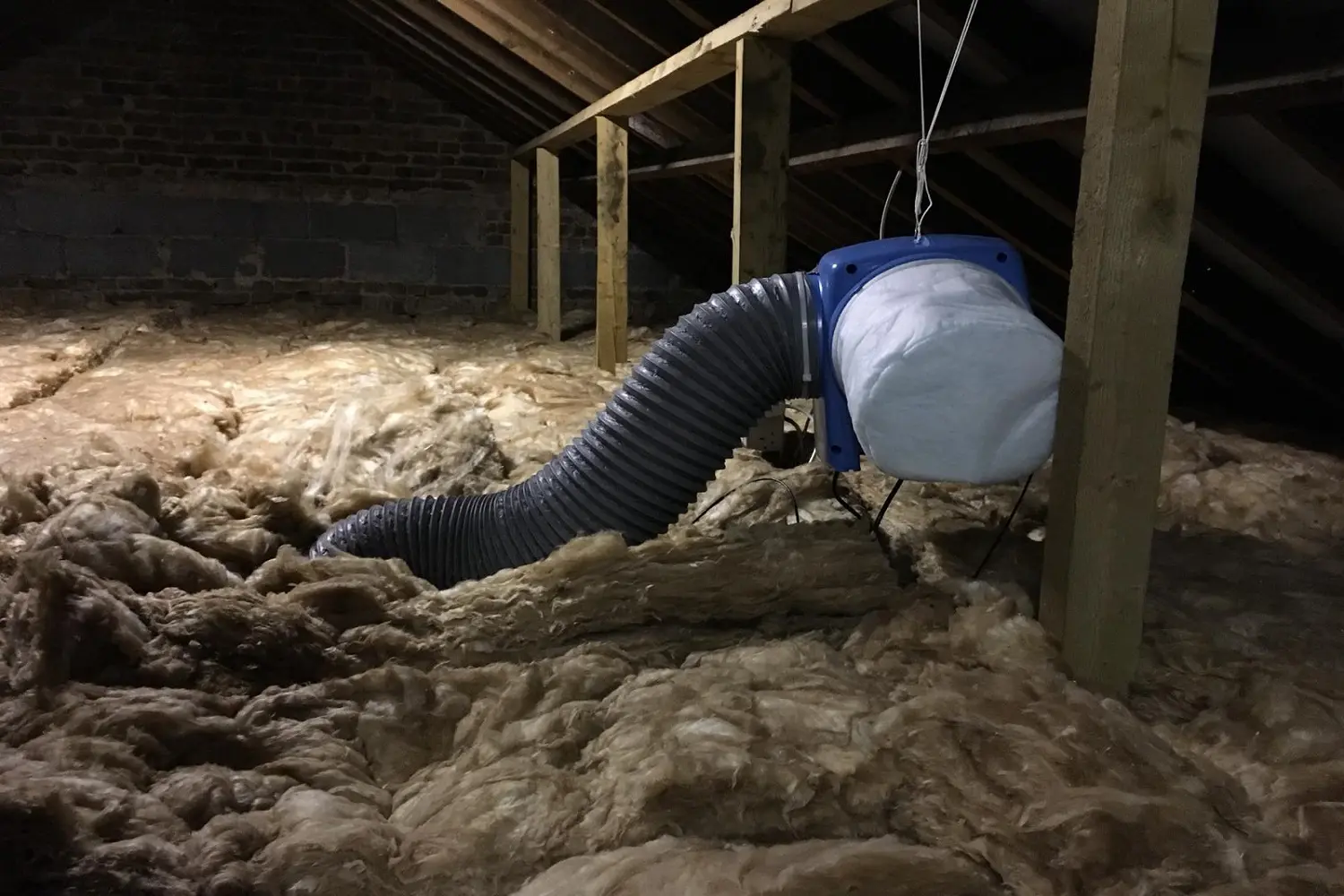
Positive insput ventilation (PIV)
The extract fans can be intermittent, but the best type of extract fan is the continuous low level extract with boost function – referred to a decentralised continuous mechanical extract fans (Dmev).
Other type of ventilation include positive input ventilation (PIV), mechanical ventilation and heat recovery systems (MVHR), and centralised mechanical ventilation (CMEV).
Conclusion
In summary, ventilation is a crucial part of having cavity wall insulation installed. By ensuring that your installation includes adequate ventilation, you can prevent a number of problems and create a healthier living environment for yourself and your family.
You also protect your property integrity and ensure the insulation measures run at an optimum level.
You can apply for support from the Great British Insulation Scheme on this link. There is more information on money saving expert – The Great British Insulation Scheme – How to get free insulation – it could save you over £300 a year
For more information on home ventilation and dampness related to cavity wall insulation please contact Biocraft – your local home ventilation and damp specialist